Artificial intelligence now drives more than half of all search interactions, making “how to optimize for AI search” essential for maintaining visibility and growth. AI search leverages machine learning, generative summaries, and semantic understanding to deliver highly relevant results, transforming traditional SEO into a dynamic, entity-focused practice that benefits brands who can adapt.
Australian companies face the challenge of shifting SERP features—such as Google’s Search Generative Experience (SGE) and AI Overviews—that can bypass organic links if content isn’t designed for AI consumption. Phoenix Wolf’s proprietary AI SEO methodology ensures your brand’s services and location-based intent are mapped precisely to AI algorithms, preserving traffic and conversions.
In this guide, you will discover:
- Foundations of AI Search and its impact on user intent and generative results.
- Entity SEO tactics to shape how AI recognises your business.
- Semantic SEO strategies that go beyond keywords and cultivate topical authority.
- AI tools and ethical automation for Australian organisations.
- Voice and local AI search optimisation suited to regional markets.
- Measurement ideas for AI Overviews and other generative features.
Industry‑specific examples and future trends so you stay ahead.
What Is AI Search and How Does It Change SEO?
AI search is the application of artificial intelligence to interpret queries and generate responses, redefining SEO by prioritising semantic relevance over exact keyword matches. By analysing user signals and entity relationships, AI systems deliver concise, contextually rich answers that can appear in overviews or direct snippets, boosting visibility for well-structured content.
This shift asks SEO teams to design for natural‑language understanding: lead with direct answers, support them with structured context, and reinforce meaning with schema and internal links.
The Evolution of Search Algorithms
Search engine algorithms have evolved significantly, shifting from keyword matching to understanding user intent and semantic relationships. Modern algorithms also incorporate user engagement metrics, site experience signals, and knowledge graph connections into ranking decisions.
According to Google’s own material on SGE, semantic understanding is central to how results are assembled and displayed. In practice, this means brands must demonstrate topical depth, entity clarity, and consistent context across pages to increase selection for AI‑driven features.
What Are AI Overviews and Google SGE?
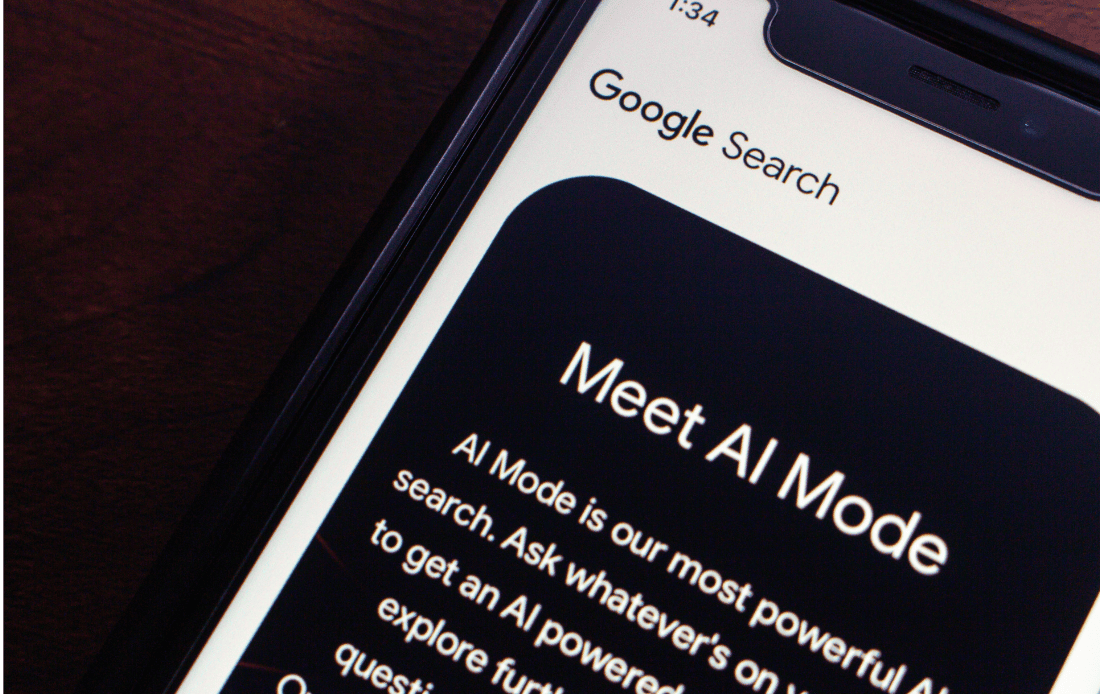
AI Overviews are Google’s generative answers that appear at the top of search results, summarising content from multiple websites into one conversational response. These overviews are powered by large language models and aim to answer a user’s query without them needing to click further.
Google SGE (Search Generative Experience) takes this further by integrating these summaries directly into the search flow. Users are presented with multi-paragraph, AI-generated responses alongside cited sources — shifting how they consume information.
Unlike traditional search results, these AI summaries prioritise clarity, authority, and structure over just keyword usage. SEO strategies that focus on entity recognition, structured data, and semantic relevance are more likely to be cited or featured in SGE and AI Overviews.
Impact of AI on Search Results
AI-driven search has fundamentally changed how users interact with information. Instead of clicking through a list of blue links, users now receive instant, conversational answers — often pulled from multiple sources and condensed by large language models.
This shift has led to the rise of zero-click searches, where users find what they need directly in an AI-generated response. As a result, traditional SEO tactics, optimising solely for blue-link rankings, are no longer enough.
To remain visible, brands must structure their content in ways that AI can easily interpret and cite. That means:
- Placing clear, direct answers high on the page
- Using schema markup to reinforce topical relevance
- Building entity clarity through consistent language and internal linking
According to Search Engine Journal, these generative AI features are already shifting user behaviour, with fewer clicks going to traditional organic results, and more engagement happening directly within the AI summary.
The brands that adapt to this new reality will be the ones AI chooses to recommend first.
How Do AI Algorithms Understand User Intent Differently?
Unlike traditional search engines that match keywords to indexed pages, AI search systems focus on semantic relationships and contextual meaning. They interpret a query by mapping it to broader entities, related topics, and search intent – whether the user is seeking information, comparison, action, or validation.
For example:
- A query like “best running shoes for flat feet” isn’t treated as a string of keywords, it’s understood as an intent to compare products for a specific foot type and use case.
- A search like “local SEO agency with AI services” is interpreted as commercial intent, where location, service type, and technical capability all matter.
To be cited in these results, your content must:
- Address the complete user journey, not just answer a single phrase
- Use structured formats like FAQs, comparison tables, or process steps
- Demonstrate topical authority through internal links, schema, and content depth
AI also rewards content that helps users take action, which Google calls “task completion value.” This could be a pricing table, a location map, a downloadable checklist, or a clear set of next steps.
The better your content aligns with the real-world intent behind the query, the more likely it is to appear in AI-generated answers.
Why Is Generative AI Important for Search Results?
Generative AI fuses cross‑document context to create coherent, personalised answers, drawing from a wide range of trusted sources and presenting information in a way that mirrors how humans naturally seek and process knowledge. Instead of simply matching keywords, it interprets context, intent, and relationships between entities to produce nuanced, task‑focused responses.
To be featured prominently in these AI‑driven answers, your content must:
- Provide entity‑rich signals (who/what/where) that remove ambiguity and ensure AI systems clearly identify your brand, offerings, and relevance to a query.
- Adopt a clean, parseable structure (headings, lists, tables, step‑by‑step guides) so AI can easily extract and reformat your information into summaries, featured snippets, or voice responses.
- Incorporate trust cues (citations to reputable sources, author bios, verified case studies, transparent policy pages) to signal credibility and authority.
- Offer multi‑format depth by integrating visuals, videos, and diagrams with descriptive metadata, which enables multimodal AI models like Google Gemini to deliver richer, more interactive results.
- Stay up‑to‑date with fresh statistics, examples, and industry developments so AI perceives your content as current and reliable.
When executed consistently, these elements not only increase your chances of being cited in AI Overviews but also strengthen your position in traditional SERPs, voice assistants, and other generative search experiences.
How Does Entity SEO Enhance AI Search Visibility?
Entity SEO is the practice of defining and connecting your brand, services, and location as discrete nodes in a knowledge graph, enabling AI systems to recognise and prioritise your organisation.
When AI search engines understand your entities clearly, they can better associate your brand with relevant topics, services, and locations. This not only boosts your chances of appearing in AI-driven results, but also increases the accuracy and consistency of how your brand is presented across different AI platforms and search environments.
What Is an Entity in SEO and Why Does It Matter?
An entity is any distinct concept—such as Phoenix Wolf (the organisation), AI SEO (the service), or Melbourne (the location)—that AI search engines use to build a knowledge graph. Clearly defined entities with accurate attributes signal authority, ensuring generative models cite your content when addressing related queries.
Entities can also include:
- Products or services you offer.
- Industry terms or specialisations.
- Key personnel and their areas of expertise.
- Partnerships, awards, or notable achievements.
By treating these as structured, connected pieces of information, you help AI understand the full scope of your authority.
How to Map Your Business Entities for AI Search
Before AI can recommend your brand, it needs to understand who you are, what you offer, and how you relate to a user’s query. That starts with clearly defined, structured entities — and consistent signals across your digital presence.
- List core entities: company name, products, services, key personnel, operating areas.
- Record attributes: descriptions, service types, locations, industries, related terms.
- Embed consistently: reflect these in on-page copy, metadata, internal links, and schema.
- Link to authoritative sources: Use outbound links and sameAs schema to connect your entities to reputable third-party profiles like LinkedIn, Wikipedia, or industry directories.
- Maintain consistency across platforms: Ensure your entity data matches across your website, Google Business Profile, and social media.
How Does Structured Data Improve Entity Recognition?
Structured data markup (JSON-LD) attaches explicit properties to your content, directing AI parsers to understand relationships and attributes correctly.
|
Entity |
Attribute |
Value |
|
Phoenix Wolf |
@type |
Organization |
|
AI SEO Consulting |
serviceType |
DigitalMarketingService |
|
Melbourne, Australia |
addressLocality |
Melbourne |
|
This Article |
mainEntityOfPage |
How SEO Shapes AI Search Results |
Pro Tip: Entity SEO is not a one-time task—it requires regular updates. As your services evolve, new case studies are published, or your business expands into new markets, your entity data should be updated to reflect these changes.
What Semantic SEO Strategies Work Best for AI-Driven Search?
Semantic SEO focuses on topic clusters, entity relationships, and user intent mapping to align content with AI search mechanisms. It goes beyond keyword matching to understand the context and relationships between topics, ensuring your content forms part of a broader, interconnected knowledge network.
Key strategies include:
- Creating topic clusters: Build a central hub page supported by in-depth articles on subtopics.
- Covering the full intent spectrum: Address informational, navigational, and transactional queries.
- Optimising for related entities: Link semantically related topics within your content.
- Integrating structured data: Reinforce context with schema markup.
- Using natural language: Write in a way that mirrors how people ask questions in AI and voice search.
By implementing these strategies, you improve your chances of being recognised as an authoritative source in AI-generated search results. For a deeper breakdown of semantic SEO tactics, explore our comprehensive guide to AI search optimisation.
How to Optimise for Voice Search and Local AI Search in Australia
Voice search and local AI search combine conversational AI with geographic intent, requiring content that reflects natural language patterns and regional references to win featured voice snippets and local pack placements.
To optimise for voice search:
- Use conversational keywords and question-based headings that match how people speak.
- Create concise, direct answers that can be easily quoted in featured snippets.
- Implement FAQ schema to increase eligibility for voice results.
For local AI search:
- Ensure your Google Business Profile is fully optimised with up-to-date contact details, opening hours, and images.
- Incorporate local landmarks, events, and colloquial terms in your content to strengthen geographic relevance.
- Use LocalBusiness schema and include precise latitude/longitude coordinates.
Combining these tactics helps AI systems confidently match your business to spoken and location-based queries, increasing your visibility in both voice-driven and proximity-based search experiences.
Measuring AI Overview Performance with Analytics
Track AI Overview performance using a combination of qualitative checks and quantitative data sources. Start with manual checks in Google SGE by searching for your priority keywords and noting when and how your content is cited in AI Overviews. Document these findings in a simple tracking sheet to monitor changes over time.
In Google Search Console, look for impression proxies—queries that historically drove clicks but now show higher impressions with lower CTR. These shifts can signal that AI Overviews are providing the answer directly, even if they’re not labelled as such in analytics.
Monitor mentions in AI platforms like Perplexity, Bing Copilot, and ChatGPT’s browsing-enabled versions. Tools that scrape or log these citations can give early indicators of your brand’s AI visibility.
For more granular insight:
- Compare historical SERP positions to post-SGE performance for the same queries.
- Use rank tracking tools that have added AI Overview monitoring features to identify trends in appearance frequency.
- Analyse shifts in traffic sources, engagement metrics, and conversions to see if AI visibility correlates with tangible business outcomes.
By combining these data points, you can identify which optimisation efforts improve AI citations and adjust your strategy accordingly.
Industry Tactics to Boost AI Visibility
Different industries require different approaches to AI SEO. Content structure, schema types, and user intent can vary significantly — and tailoring your strategy ensures your brand is recognised as authoritative in your niche.
Here’s how AI search optimisation can look across key verticals:
E-commerce: Enrich product pages with detailed attributes, reviews, and structured data. Use Product schema to highlight key features such as price, availability, and ratings. Incorporate high-quality images with descriptive ALT text and optimise category pages with relevant internal links. For example, an online fashion retailer could use schema to ensure AI tools display size guides, shipping details, and customer reviews directly in search results.
Professional Services: Publish location-based case studies and client success stories to reinforce expertise and geographic relevance. Implement LocalBusiness and Service schema to define service areas, industries served, and specialisations. For instance, a law firm could create dedicated pages for each practice area, supported by structured data and internal links to related case studies, ensuring AI platforms can surface them for specific legal queries.
Hospitality: Use schema for menus, events, and reviews to improve AI recognition and citation in search results. Leverage Event schema for upcoming promotions or seasonal offers, and Menu schema to display signature dishes and dietary options. A hotel, for example, could enrich its events page with structured data so AI search can present conference facilities, wedding packages, and guest amenities alongside location and booking links.
By tailoring optimisation tactics to each industry’s content types and user intent, businesses can increase their chances of being featured prominently in AI-generated summaries, voice search results, and local AI search experiences.
Benefits of AI-Optimised SEO
AI-optimised SEO drives deeper engagement by aligning content structure with AI search mechanics, ensuring your brand is positioned where users are now finding answers—within AI-driven summaries, voice results, and predictive search experiences.
Key benefits include:
- Increased AI Overview visibility: By structuring your content for AI consumption, your brand is more likely to be cited as a trusted source in Google SGE, AI Overviews, and emerging search assistants.
- Higher engagement and conversions: Appearing directly in AI summaries shortens the user journey, bringing motivated visitors who are ready to act.
- Enhanced topical authority: Consistently addressing related topics with semantic SEO builds a web of interconnected content that AI models identify as authoritative.
- Improved brand trust: Including transparent authorship, credible sources, and consistent entity data reassures both human users and AI systems of your reliability.
- Future-proof adaptability: As AI models evolve, an AI-first SEO foundation makes it easier to integrate new formats, schema types, and media assets.
Example: A Melbourne-based retailer that restructured its category pages with Product schema and conversational Q&A saw a 28% increase in AI Overview citations within three months. Similarly, an Adelaide-based medical centre implementing entity SEO across practice area pages achieved a measurable rise in both local pack appearances and AI-generated voice search mentions.
By integrating these strategies, AI-optimised SEO not only boosts your visibility in current search environments but also prepares your brand for the next generation of AI-led discovery.
The Future Outlook for SEO in the AI Search Era
Expect deeper integration with AI models, predictive analytics to forecast emerging trends, and greater emphasis on ethics and transparency in AI-driven content. For example, Gartner predicts that by 2026, traditional search engine volume will drop 25%, as users increasingly rely on AI agents and chatbots to answer queries directly, bypassing traditional search engines. The businesses that succeed will be those that adapt quickly, monitor results closely, and continually refine their strategies.
How Will AI Developments Like Gemini and Google SGE Evolve?
Emerging AI models—such as Google Gemini—promise deeper multimodal understanding and personalised overviews. This means AI will increasingly integrate text, image, video, and audio inputs to deliver richer, more accurate results. For instance, a local café could appear in a Google SGE overview that includes not only its address and reviews but also an AI-curated image carousel from Instagram and menu highlights pulled from its website. SEO will need to incorporate image optimisation (ALT text, captions), video schema, and rich media descriptions to feed these sophisticated AI pipelines.
What Role Will Predictive Analytics and AI Ethics Play in SEO?
Predictive analytics will forecast trending queries and pre-empt algorithm shifts. For example, tools like Google Trends or AI-driven analytics platforms can spot a spike in voice search queries for seasonal products weeks before peak demand. AI ethics will guide transparent content creation and data usage—ensuring compliance with evolving regulations like the EU AI Act. Organisations adopting ethical AI frameworks will build stronger long-term trust with users and platforms, gaining a competitive advantage as consumers increasingly value transparency.
How Can Businesses Stay Ahead in AI-Focused SEO?
Continuous content audits, proactive schema updates, and adoption of AI monitoring tools are essential to keeping pace with AI search evolution. For instance, quarterly reviews can uncover entity gaps or outdated schema that may prevent your brand from appearing in AI Overviews.
Staying competitive means aligning your strategy with how search is actually working today, not how it used to. That’s where Phoenix Wolf comes in. As experts in semantic SEO and AI visibility, we help brands adapt faster and rank smarter.
By embracing AI-first SEO practices, grounded in entity clarity, structured content, and ethical automation, you lay the groundwork for sustainable visibility in AI-driven search. The sooner you start, the stronger your presence will be.
→ Ready to future-proof your visibility? Explore our SEO services and start showing up where AI makes decisions.
FAQs About AI Search & SEO
How do I know if my business is being cited in AI search results?
There’s no single dashboard yet, but you can manually check for mentions in Google SGE, Perplexity, and Bing Copilot. Tools like SearchAtlas or Authoritas are starting to offer AI citation tracking. Also watch for shifts in impressions or engagement with “zero-click” keywords in Search Console.
What should I prioritise first if I’m new to AI SEO?
Start by mapping your entities—your brand, services, people, and locations—and ensure these are reflected consistently across your site and schema. Then restructure existing content using semantic SEO: clear headings, rich internal links, and coverage of full intent.
Can AI search help with lead generation or just visibility?
Both. AI Overviews often pull in mid-to-late funnel content, especially service definitions, comparisons, and FAQs. Optimising these helps convert “information seekers” into qualified leads.
How does voice search tie into AI SEO?
AI models like Google Assistant and Siri rely on structured data and direct answers. Voice search often pulls from featured snippets or LocalBusiness schema, so formatting for quick, spoken responses increases your chances of being featured.
Will optimising for AI search affect my paid media campaigns?
Indirectly, yes. High AI visibility builds brand familiarity, which can improve performance of paid search and social campaigns by increasing click-through rates and lowering cost-per-click.
How often should I update content to stay relevant in AI models?
Every 90 days is a good benchmark for high-value pages. Update stats, refine schema, and track visibility in new AI features. AI models reward freshness and trustworthiness.
Does AI SEO require new content formats or platforms?
Not always. But adding multimedia (videos, diagrams, structured FAQs) with metadata boosts multimodal AI visibility, especially with tools like Gemini, which fuse text, image, and video inputs.
How can Phoenix Wolf help my business rank in AI search?
We combine deep technical SEO with a proprietary AI search framework tailored to Australian markets. From entity mapping and structured data to semantic strategy and AI monitoring—we help future-proof your visibility where decisions now happen.