Not long ago, search meant one thing: Google. Ranking high in search results was the holy grail of digital marketing, and traditional SEO strategies – from keyword targeting to backlink building – were all designed to win that game.
But the game has changed.
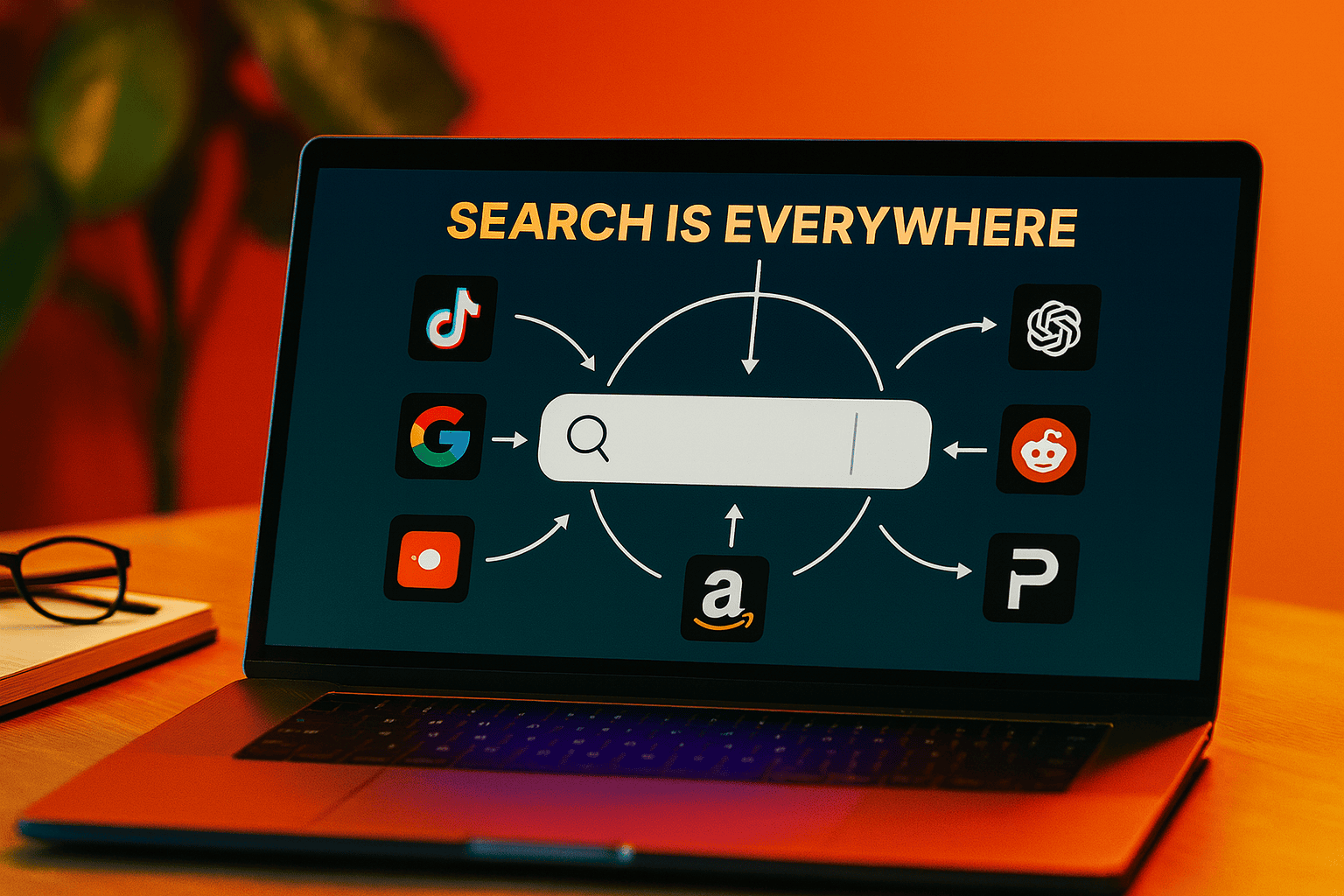
Search is no longer a single destination. It’s fragmented across platforms, devices, and – increasingly – AI interfaces. Customers aren’t just “searching” in the classic sense. They’re deciding – and they’re doing it in more places than ever before.
If your brand is only visible on Google, you’re missing out on the real decision-making moments.
This article explores how SEO has evolved into multi-platform visibility, why search is now an ecosystem, and how Phoenix Wolf helps brands rise across traditional search, AI engines, and modern discovery platforms through a smarter framework: Search Experience Optimisation (SEO).
What is Search Experience Optimisation?
Search Experience Optimisation (SEO) is the strategic alignment of your brand, content, and presence across every platform and interface where consumers make decisions – including traditional search engines, AI tools, social platforms, review sites, and more.
At Phoenix Wolf, it’s the tactical execution layer of our broader Intelligent Visibility Optimisation (IVO) framework – designed to make your brand not just visible, but chosen.
Where AI SEO Shows Up
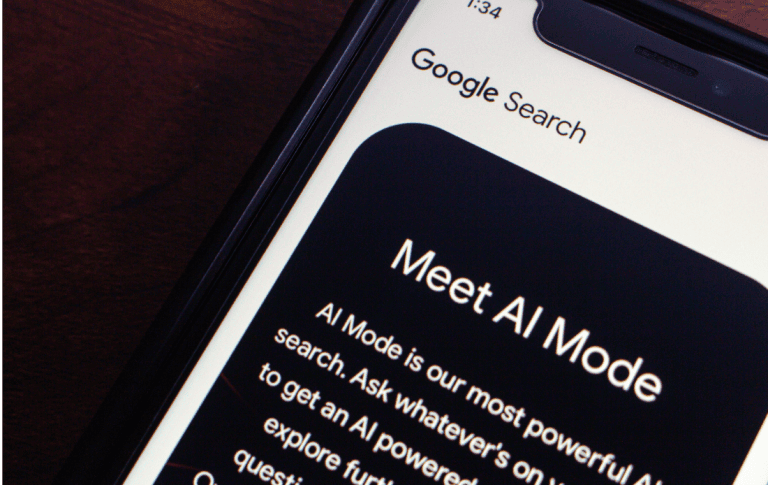
AI SEO doesn’t just help you rank, it helps you get cited where modern users are searching. Here’s where your efforts can pay off:
- Google AI Overviews: These AI-generated summaries now appear above traditional search results. They pull from multiple sources to deliver quick, aggregated answers. If your content is cited here, you’re effectively the new Position Zero.
- ChatGPT (with browsing): With browsing enabled, ChatGPT pulls from authoritative sources to answer questions and recommend products or services. Well-structured content with schema and strong topical authority is more likely to be linked or cited.
- Perplexity.ai: Perplexity answers complex questions by summarising multiple sources and linking to them. It often surfaces niche blogs, expert content, and pages with structured, helpful answers.
- Microsoft Copilot / Bing AI: These tools are integrated into the Microsoft ecosystem — appearing in search, Office products, and more. They cite high-quality web content to enhance user queries, especially for decision-making or research.
The big shift? AI isn’t just fetching data. It’s summarising, curating, and choosing winners. And those winners are the brands with smart, structured, trustworthy content that’s built to be found, understood, and shared by machines.
The New Reality: Search Is No Longer a Single Touchpoint
Let’s start with a simple truth: your customers don’t just search on Google anymore.
They discover brands through TikTok videos, validate them in Reddit threads, compare options with ChatGPT, and look for reviews on Amazon or YouTube. Each one of these platforms acts as a search engine in its own right, even if it doesn’t look like one.
And they’re all influencing purchase decisions.
|
Platform |
Search Behaviour |
Decision Moment |
|
|
Keyword-based search |
Initial discovery |
|
TikTok |
Visual discovery via algorithm |
Emotional impulse |
|
|
Peer validation |
Trust check |
|
ChatGPT |
AI-driven Q&A |
Recommendation filtering |
|
YouTube |
Long-form content |
Deep evaluation |
|
Amazon |
Product reviews |
Purchase trigger |
This shift means your SEO strategy must evolve from simply ranking to showing up everywhere decisions are made – even if that doesn’t include a browser search bar.
What Makes a Brand ‘Citable’ in AI Search?
In traditional SEO, being “indexed” is the baseline. In AI search, being cited is the goal.
Large language models like ChatGPT, Perplexity, and Claude don’t show search result pages. They summarise answers based on trusted, high-authority sources, including forums, articles, structured data, and frequently referenced entities.
So what does it take to be included?
- Be mentioned across the web: AI favours consistency. Brands cited in Reddit threads, forums, and third-party articles are more likely to be included in answers.
- Use structured data: Schema markup (FAQ, Article, Review, HowTo, and Organization) helps machines better interpret your content, making it more likely to be surfaced.
- Publish with clarity and context: AI tools rely on semantic relevance. Clearly written, context-rich content helps reinforce topical authority.
- Create citation-worthy content: Think research-backed blog posts, industry explainers, FAQs, expert roundups, and product comparisons.
- Earn real validation: User-generated content like reviews, testimonials, and social media discussions builds trust signals across platforms.
At Phoenix Wolf, we build cross-platform content strategies designed to not only rank in traditional search – but to also train AI systems to recognise, trust, and recommend your brand through SEO strategies tailored for AI search and modern decision platforms.
The Problem with Traditional SEO (And Why It’s Not Enough)
Traditional SEO still plays an important role – especially for discoverability. But here’s the catch:
Even if you’re ranking on Google, you’re losing if you’re not also visible in the places where decisions happen.
Let’s break it down:
- Ranking ≠ Relevance: Just because you appear in search results doesn’t mean you’re part of the conversation.
- Traffic ≠ Trust: Visibility alone doesn’t convert. Customers want third-party validation – not just marketing claims.
- Content ≠ Context: A perfectly optimised blog post might check SEO boxes but fail to influence an actual purchase decision if it’s not where your audience is looking.
This disconnect is what we call the Visibility Gap – and it’s the reason many brands are seeing strong traffic numbers but stagnant conversion rates.
Why Search Experience Optimisation Works
Traditional SEO vs. Search Experience Optimisation
To make this shift clearer, here’s how traditional SEO stacks up against Search Experience Optimisation:
|
Aspect |
Traditional SEO |
Search Experience Optimisation |
|
Focus |
Google rankings |
Multi-platform presence |
|
Goal |
Visibility |
Influence + validation |
|
Format |
Blog and website content |
Multi-format, platform-native content |
|
Distribution |
Primarily organic search |
Organic + AI + platform-native search |
|
Outcome |
Traffic |
Decisions + conversions |
This shift reflects how modern consumers navigate search, not linearly, but across platforms in fragmented, rapid-fire ways. This isn’t just a shift in tactics, it’s a shift in mindset. Instead of optimising for clicks, we’re now optimising for credibility, presence, and AI understanding.
Unlike traditional SEO, which focuses on technical fixes and keyword visibility, Search Experience Optimisation prioritises:
- Platform-specific presence (e.g. TikTok, YouTube, Reddit, Amazon, LinkedIn)
- AI search visibility (ChatGPT, Perplexity, Claude, etc.)
- Decision-based content formats (reviews, citations, user-generated content)
- Cross-platform trust signals (mentions, ratings, citations, schema)
It’s not about flooding the internet with content. It’s about intentional placement in the moments that matter.
Why AI Search Engines Are Changing the Game
AI tools like ChatGPT, Gemini, and Perplexity don’t deliver search results like Google. They deliver summaries. And those summaries are based on who gets:
- Cited the most
- Trusted the fastest
- Mentioned across reliable sources
If your business isn’t being cited in Reddit threads, reviews, podcasts, articles or structured data – AI tools won’t include you in their answers.
That’s why Phoenix Wolf’s SEO services are built for both human and machine visibility. We combine technical SEO, content authority, and platform-specific validation to help your brand surface in AI-generated responses and human decision moments alike — all through strategies designed for AI search and multi-platform optimisation.
Different Platforms = Different Decision Psychology
What About Voice Search and Smart Assistants?
While AI tools like ChatGPT and Perplexity are leading the new wave of summarised answers, voice search and smart assistants are also shaping how people discover brands and make decisions.
When someone asks Siri, Alexa, or Google Assistant for the “best local SEO agency” or “top-rated wireless headphones,” they’re not reading pages of results, they’re acting on a single answer.
To surface in these moments, your brand needs:
- Optimised local listings with accurate NAP data
- Structured data that clearly defines services, ratings, and FAQs
- Strong reputation signals, like reviews and citations
These assistants often pull from sources like Google Business Profiles, schema markup, and high-authority review sites. That’s why Search Experience Optimisation must include voice and smart interface compatibility and not just traditional screen-based search.
At Phoenix Wolf, we integrate this layer into our technical and local SEO strategy to ensure you’re brand shows up in every modern search interface, even the ones you can’t see.
One of the core truths behind Search Experience Optimisation is that each platform has its own decision code – a unique mix of content format, psychological triggers and influence signals.
|
Platform |
Decision Code |
|
|
Authority + clarity |
|
ChatGPT |
Citations + semantic structure |
|
|
Authenticity + peer validation |
|
TikTok |
Emotion + novelty |
|
YouTube |
Depth + credibility |
|
Amazon |
Reviews + proof |
|
|
Aspiration + identity |
This is why repurposing the same blog post everywhere won’t work.
At Phoenix Wolf, we map your brand content to the format, psychology, and ranking logic of each platform – from social to search to AI.
How to Prioritise Platforms: Use the R.I.C.E. Framework
That’s where the R.I.C.E. method comes in — a simple but powerful framework we use at Phoenix Wolf to score and prioritise platform opportunities based on strategic impact.
Here’s what it stands for:
- R = Reach
Does the platform give you access to a meaningful audience volume that aligns with your target market? - I = Impact
Will your presence on this platform directly influence decision-making — or is it just noise? - C = Confidence
Can your brand show up authentically on this platform? Do you have a unique angle or voice that suits the environment? - E = Ease
Can your team execute well without burning out? Do you have the tools, skills, or support to show up consistently?
By scoring each platform against these criteria (on a scale of 1 to 5), you can identify the 2–3 that offer the highest return on visibility — and avoid wasting time on low-impact channels.
For example:
- TikTok might score high on Reach and Impact but low on Ease.
- Reddit might score high on Impact and Confidence, but moderate on Reach.
- LinkedIn might score high across all four for a B2B brand.
A Real-World Example: How Cross-Platform Visibility Works
Let’s bring this strategy to life with a simplified example:
Imagine a skincare brand that’s struggling to convert despite ranking well on Google. With a traditional SEO-only approach, traffic is flowing, but sales are flat.
Now, let’s apply Search Experience Optimisation:
- A TikTok influencer posts an honest review of their product.
- A Reddit thread discusses its benefits with real users validating it.
- The brand appears in a “best skincare” ChatGPT response thanks to well-structured citations and blog content.
The result? Decision confidence across touchpoints, and a measurable increase in conversions, even if their Google rankings stay the same.
This is how fragmented visibility compounds. Each platform supports the other, and AI tools connect the dots in the background.
Want to see how this strategy applies to your industry? Explore our SEO services focused on AI search visibility and see how we help brands rise in both traditional and AI search engines.
Internal Linking Is a Trust Signal (For Google and AI)
Internal linking isn’t just good SEO hygiene – it’s critical for helping both search engines and AI models understand your authority structure.
By linking articles like this to cornerstone content – like our comprehensive SEO services page – you create a citation web that signals topical expertise.
For example:
“If you’re looking to implement a smarter, AI-ready SEO strategy that goes beyond rankings and into the world of cross-platform trust, we’d love to show you what that looks like.”
You Can’t Just Rank – You Need to Resonate
Search is no longer about clicks and impressions. It’s about trust, timing, and context.
To influence real decisions today, your brand must show up across the entire digital ecosystem – including the AI-powered layers shaping tomorrow’s visibility.
At Phoenix Wolf, our mission is to help you be seen, cited, and selected – across every search format that matters.
Because in today’s fractured attention economy, it’s not about who yells the loudest.
It’s about who shows up when it counts.
FAQs About Search Experience Optimisation
What’s the difference between traditional SEO and Search Experience Optimisation?
Traditional SEO focuses on ranking in Google search results through keywords, backlinks, and technical fixes. Search Experience Optimisation (SEO) takes a broader approach — helping your brand show up across all platforms where decisions happen, including AI tools like ChatGPT, social platforms like TikTok, and validation spaces like Reddit and Amazon.
Is Search Experience Optimisation still compatible with Google SEO?
Absolutely. It includes all the foundational elements of traditional SEO, but extends your visibility beyond Google, into AI search, voice assistants, and decision-driven platforms. Think of it as SEO, upgraded for how people (and machines) now make choices.
How does Search Experience Optimisation help with AI search tools like ChatGPT?
AI tools don’t browse links, they summarise content. Search Experience Optimisation ensures your brand is frequently cited, well-structured, and topically relevant across the internet so that models like ChatGPT, Perplexity, and Claude are more likely to include your business in responses.
What kinds of content help influence AI and platform-based decisions?
Content that influences AI and platform-based decisions needs to go beyond keywords. Here’s what works:
- Cited or referenced by others (articles, forums, reviews)
- Structured clearly with schema markup (FAQs, HowTos, etc.)
- Platform-native in format (e.g. short-form video for TikTok, long-form breakdowns for YouTube)
- Written with semantic clarity for AI models to interpret easily
- Regularly updated and topically focused to reflect real-time relevance
Do I need to be active on every platform?
No. Quality beats quantity. We use a prioritisation model (R.I.C.E.) to determine where your customers are most likely to validate decisions. Most businesses only need to focus on 2–3 high-impact platforms that align with their audience’s behaviour. This ensures your presence is both intentional and effective.
Think of it like investing: instead of spreading thin across every channel, you focus your efforts where the return is highest.
Can Search Experience Optimisation help with brand awareness?
Yes, by showing up in more platforms where people are making decisions (like Reddit, TikTok, and ChatGPT), your brand becomes more visible across the full customer journey. Even if users don’t click through immediately, you’re creating recognition and recall that compounds over time.
Search Experience Optimisation helps embed your brand into multiple decision-making environments. These repeated exposures build subconscious familiarity — and when it’s time to choose, you’re the brand they remember and trust.
How does Phoenix Wolf implement Search Experience Optimisation?
We start with a discovery session to understand your audience and where they validate decisions. Then we build a cross-platform content and SEO strategy that includes schema markup, AI-ready content, social validation, and targeted internal linking, all tied into our Intelligent Visibility Optimisation (IVO) framework.
Our process includes AI search audits, competitor citation mapping, and structured data implementation, all tailored to your brand’s decision touchpoints.
Will this strategy improve my Google rankings too?
Yes. All the on-site improvements we make, like schema, content clarity, and internal linking, support Google’s core ranking factors. But the real edge is that your brand becomes more visible across AI-driven and conversational search, where competition is still light.
How long does it take to see results?
Search Experience Optimisation typically shows early signals within 30–60 days, such as increased branded searches, citations in AI tools, or visibility in third-party platforms. And because we prioritise citations and cross-platform presence, early signals (like AI mentions or Reddit threads) often appear before rankings move. Stronger momentum and rankings usually build over 3–6 months, depending on content velocity and platform mix.
Is Search Experience Optimisation worth it for small businesses?
Yes absolutely, especially for businesses that rely on word of mouth, referrals, or niche audiences. Search Experience Optimisation helps you appear where your audience is already making decisions, even if they never click on a traditional search result. It gives you asymmetric visibility against larger competitors.
What industries benefit most from this approach?
Any business where customers make comparison-based decisions can benefit, including ecommerce, SaaS, service providers, healthcare, finance, education, and B2B. If your audience validates trust across multiple touchpoints before converting, this strategy works.